Del Mar 2026: How to Handicap the Summer Meet by the Sea
Fast, front-running, and unmistakably West Coast — Del Mar's summer meet has a character all its own. Here's how to read the speed bias and find value on both surfaces.
Drew
Lead Handicapper · Aces & Races
Where the Turf Meets the Surf
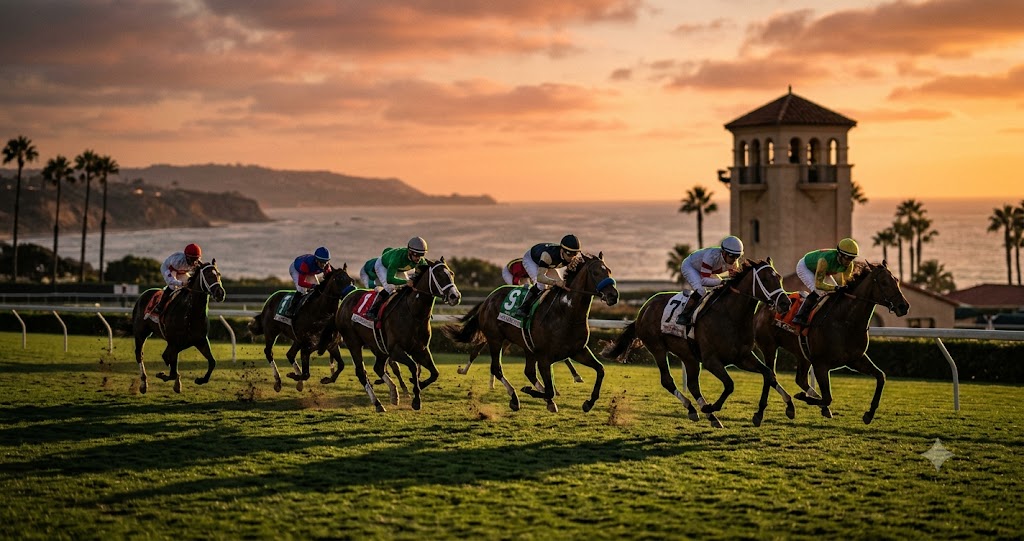
Every summer, Southern California racing packs up and moves to the coast. Del Mar — founded by Bing Crosby and a group of Hollywood partners in 1937 — runs a marquee summer meet from mid-July into early September, and it has a character all its own: fast, front-running, and unmistakably West Coast.
The Surface: Speed by the Sea
Del Mar's one-mile dirt track has long carried a reputation for favoring early speed, especially in the shorter sprints. The run to the first turn in a five- or five-and-a-half-furlong dash is brief, and a horse that breaks sharp and secures the rail is very hard to run down. If you're handicapping the dirt sprints here, early position and post draw belong near the top of your list.
The turf course is a different game. Del Mar's grass racing is prestigious and draws deep, internationally-flavored fields, and it tends to run more tactically honest than the speed-tilted dirt — closers get a fairer shake on the lawn.
The Races That Define the Meet
- The Pacific Classic — Del Mar's Grade 1 centerpiece, a mile-and-a-quarter test that brings out the best older dirt horses on the West Coast and beyond.
- The Del Mar Oaks — a Grade 1 on the turf for three-year-old fillies.
- The Del Mar Debutante and Futurity — key early tests for two-year-olds that often point toward the following spring's Classic trail.
- A deep undercard of stakes-quality turf and dirt racing throughout the meet.
Angles That Work at Del Mar
1. Prioritize speed and inside posts on the dirt
The sprint bias is real. Horses that can show early foot from a good post are the recurring winning profile — and the public sometimes overbets closers here out of habit carried over from other tracks.
2. Read the turf differently
On the grass, respect closers and proven course form. The turf routes reward tactical trips and a finishing kick more than raw early speed. Pace analysis is the key input on both surfaces — just applied differently to each.
3. Follow the sharp barns
A boutique meet like Del Mar rewards trainers who target it and arrive razor-sharp. Meet-specific trainer and jockey form is unusually predictive over a compact summer calendar.
4. Hunt overlays in deep fields
Competitive fields mean prices. Convert the morning line to implied probability and look for horses whose real chance beats their price — the discipline that turns picking winners into long-run profit.
How We Play Del Mar
Our model rates every horse on the card by projected win probability, we map the pace shape, and we flag the value plays — with special attention to the dirt speed bias and the very different turf game. See our Del Mar picks and handicapping hub, or get the full card with win probabilities and exotic ticket builds on The Edge.
Want picks like this every day?
Ranked picks with win probabilities, bomb & value alerts, exotic ticket builds, and Pick 3/4/5 sequences — delivered before first post every morning.
Join the Edge — $14.99/mo →