How to Handicap Churchill Downs: A Complete Guide to the Spring Meet
Churchill Downs is North America's most iconic racetrack — and one of the most analytically demanding. Here's exactly how we approach every card at the home of the Kentucky Derby.
Drew
Lead Handicapper · Aces & Races
Understanding Churchill Downs
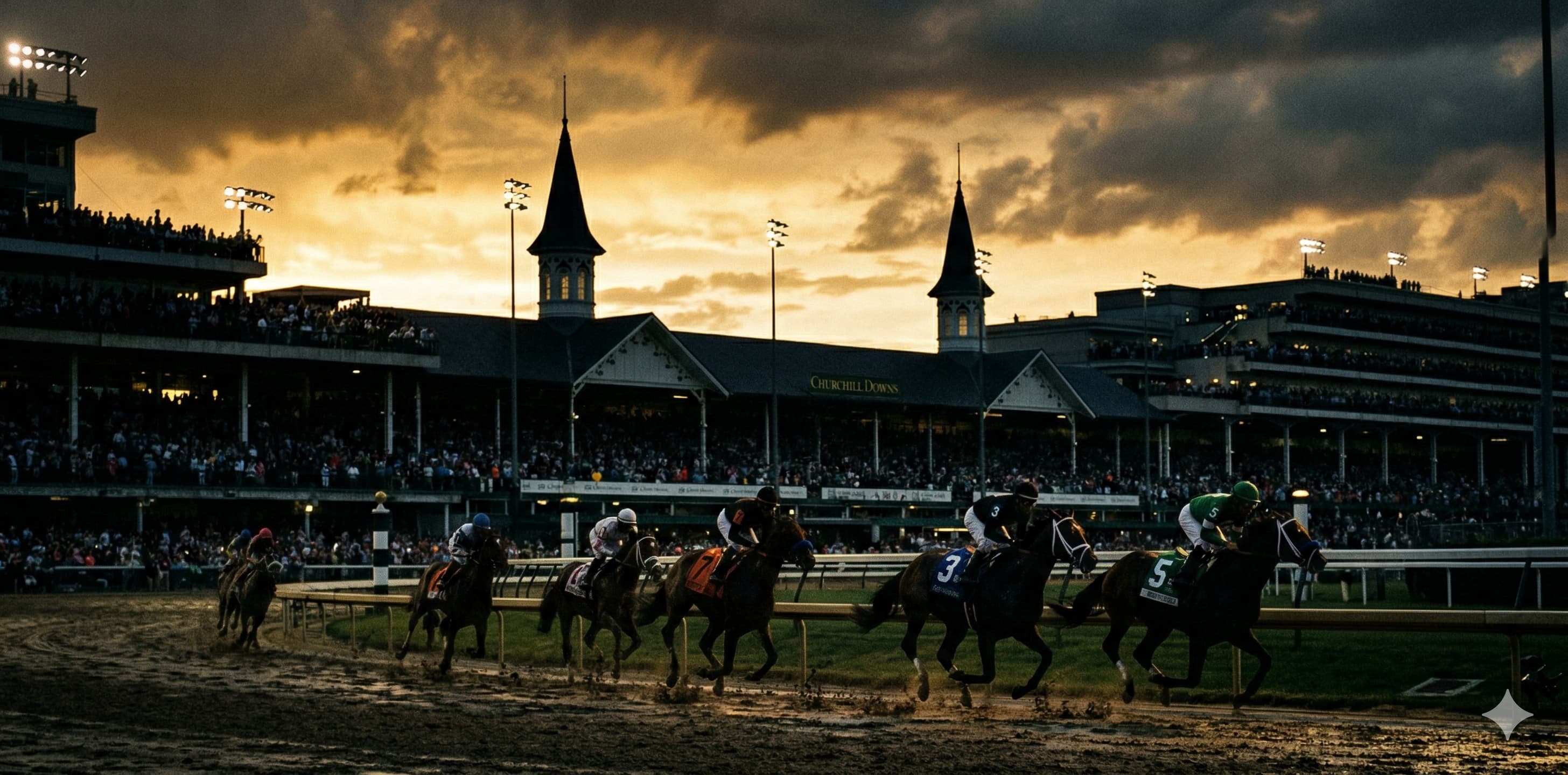
Churchill Downs is the most recognizable racetrack in North America — and one of the most analytically demanding. The Spring Meet (late April through early July) draws the country's best three-year-olds, the sharpest trainers, and increasingly sophisticated betting syndicates. If you approach it the way you'd approach a regional meet, you'll lose money steadily.
The Fall Meet (November) is a different animal — smaller fields, fewer national-caliber horses, but consistently softer betting markets. We'll touch on both, but the Spring Meet is where the edge is.
The Track Itself: What You Need to Know
Churchill Downs is a 1-mile oval with a long stretch run — about 1,234 feet — which gives horses real room to close. The turns are tighter than Belmont or Saratoga, which penalizes horses racing very wide. Historically, dirt horses with early position and the ability to save ground on the rail have a measurable physical advantage.
Churchill also has a turf course inside the main track. The grass course is a tight, choppy oval that rewards compact, nimble horses over long-striding European types that need room to fully extend. When you see a turf horse shipping from a big, sweeping European circuit, that's a red flag regardless of the figure.
Spring Meet Pace Dynamics
The Spring Meet has one defining characteristic: deep, competitive fields. The Kentucky Derby draws 20 horses. Supporting stakes fill to 10 or 12. Allowance races fill quickly. More horses almost always means more early speed — which means pace duels happen more often than at smaller meets.
Our data across 200+ race days at Churchill shows that closers win at a rate meaningfully above their market odds, particularly in routes at a mile and beyond. The pace consistently gets hot enough to set them up.
Sprints are different. In 6-furlong dashes, a lone speed horse at Churchill can and does steal races. The tight turns help a speed horse maintain momentum if it negotiates the bend cleanly. The key question before every Churchill sprint: how many E horses are in this field? Read our full pace analysis guide for the framework we use to answer that.
The Three Most Predictive Factors at Churchill
1. Previous Churchill Form
Horses that have run at Churchill before — particularly those that showed good position at the first call — outperform expectations consistently. The track rewards horses that know how to navigate its specific geometry. A horse with strong Churchill form at the same class level is worth a premium in our model every time it returns.
2. First-Call Position
At Churchill, whether a horse is within five lengths of the leader at the quarter-mile is one of the strongest predictors of final position. Unlike Saratoga, where a horse can rally from 12 lengths back, Churchill's tighter oval makes up-close trips almost mandatory in shorter races. Horses that consistently run in the top three at the first call are the backbone of the Churchill card.
3. Beyer Figure Ceiling
Churchill is a fast track. Horses that win consistently here run Beyers in the 90s and above at the stakes level. When a horse's career-best figure is an 82 and it's stepping into a Grade I, that's not a spot play — that's a trap. Figure context matters: an 85 at Oaklawn and an 85 at Churchill are different performances, and the track variant can shift meaningfully during a single week of racing.
See our speed figures guide for how to properly adjust and compare figures across circuits.
Grade I Stakes: How We Approach Each
Kentucky Derby (Grade I — First Saturday in May)
The Derby is the most-bet race in American sport, with pools in the tens of millions. It's also the hardest race to find value in. Sharp money hammers every legitimate contender; true overlays are rare. Our approach: fade public favorites when the pace setup doesn't support them, and look hard at horses with proven closing ability when the pace projection shows multiple E horses going at it early. A hot pace with a lone closer is one of the most reliable Derby scenarios there is.
Kentucky Oaks (Grade I — Friday of Derby Weekend)
The Oaks is consistently a better betting race than the Derby. The pools are smaller, fewer national bettors are engaged, and filly form between January and late April is genuinely hard to evaluate. This is where pace scenario analysis and class drops pay off most reliably. We target overlaid closers in the Oaks every year.
Clark Stakes (Grade I — Fall Meet, Thanksgiving Weekend)
One of our favorite betting races of the year. The Clark is run at 1⅛ miles for older horses — often a field of 6 to 9 — which means the pace scenarios are cleaner than Derby week and the market, thinner during the fall meet, creates real overlay opportunities. A well-placed closer at 6-1 or 7-1 in the Clark is worth targeting aggressively.
The Bottom Line
Churchill Downs rewards handicappers who do the homework. Depth of field, pace complexity, and the premium placed on track-specific form all create edges for anyone willing to go deeper than the headline figures.
Want to see our Churchill analysis applied every race day? The Edge covers every Churchill card with full pace maps, model ratings, and value flags before first post.
See all the tracks we cover in our track picks directory.
Want picks like this every day?
Ranked picks with win probabilities, bomb & value alerts, exotic ticket builds, and Pick 3/4/5 sequences — delivered before first post every morning.
Join the Edge — $14.99/mo →